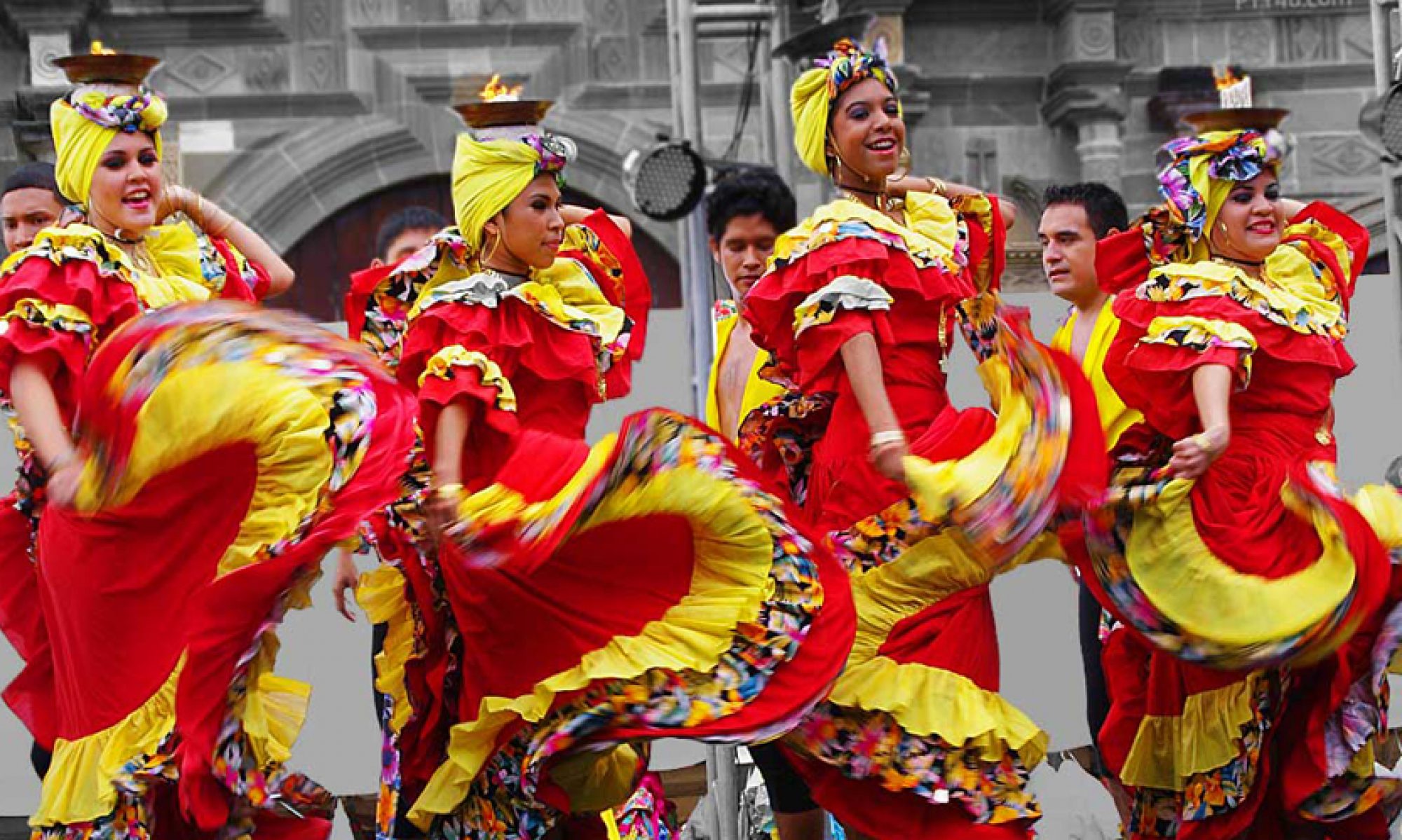
During our semester in Prof. Washburne’s Salsa, Soca & Reggae class, we were each struck by the wide variety of genres, play styles and instrumentations found throughout Caribbean music. From the sharp percussions of Cuban son, to the groovy bass of Jamaican reggae, every genre has a distinct history rooted in cultural, political, or religious motives.
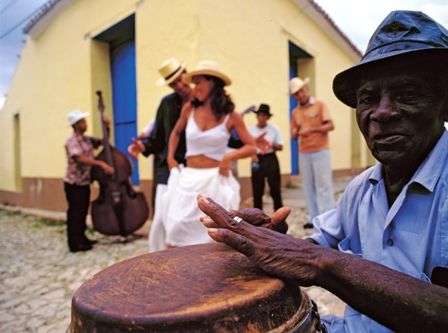
A recurring theme that we noticed across the lectures, readings, and our concert outings is that Latino music is a more interactive pursuit than most modern Western music. Consider rumba music, in which the audience is intimately involved with the performance. From the initial diana, or call to the dance floor, to the improvisational chorus, rumba emphasizes community participation. The genre blurs the line between the audience and performers as dancers, drummers, and vocalists may swap out for spectators. Even outside a traditional performance setting, involvement is paramount in Caribbean music. In the Haitian Vodou religion, musical rituals are essential to allow good spirits to possess the bodies of believers. Reggae music, one of the most globally successful genres to emerge from the Caribbean, interacts with its audiences through Rastafarianism and its beliefs. Reggae was a medium for change, and artists used the genre to promote social justice and inspire Jamaican patriotism throughout the country. In the Caribbean, music is interlaced with society at the deepest level. As we study the music, it is important to not only understand the styles of play, but also the sociocultural influences that informed them and the traditions that these styles continue to perpetuate. To this end, we wanted to immerse ourselves as deeply as possible in Caribbean music and culture for our final project, and dance lessons were a great opportunity to do this.
“Ethnomusicologists study music, but their primary aim is to understand how music works within a given culture or society. They not only listen to the way music is performed, but they look at the environment or context in which music is made.”
-Michael Largey, “Ethnomusicology and Musical Collecting Techniques”
To explore Latin dance in New York City, the six of us split into pairs and took two classes in either bachata, rumba, or salsa. We visited a variety of venues across New York City and we had the opportunity to work with many different partners and instructors with varying degrees of familiarity with the dance styles. While none of us have any experience in dance, we were all able to pick up the basics and learn some flashy moves to try during our next night out. Learning the dance associated with the music we had been listening to all semester has expanded our understanding of the genre, and given us better insight to how the musical traditions of the Caribbean are performed.
Explore our website to find out more about our Caribbean dance experience and learn the basics of bachata, rumba, and salsa!
-Brooks Ralph, Sophie Broadbent, William (Gage) Holzhauer, Ben Boccara, George Patterson & Lorenzo Frati
 Caribbean Dancing